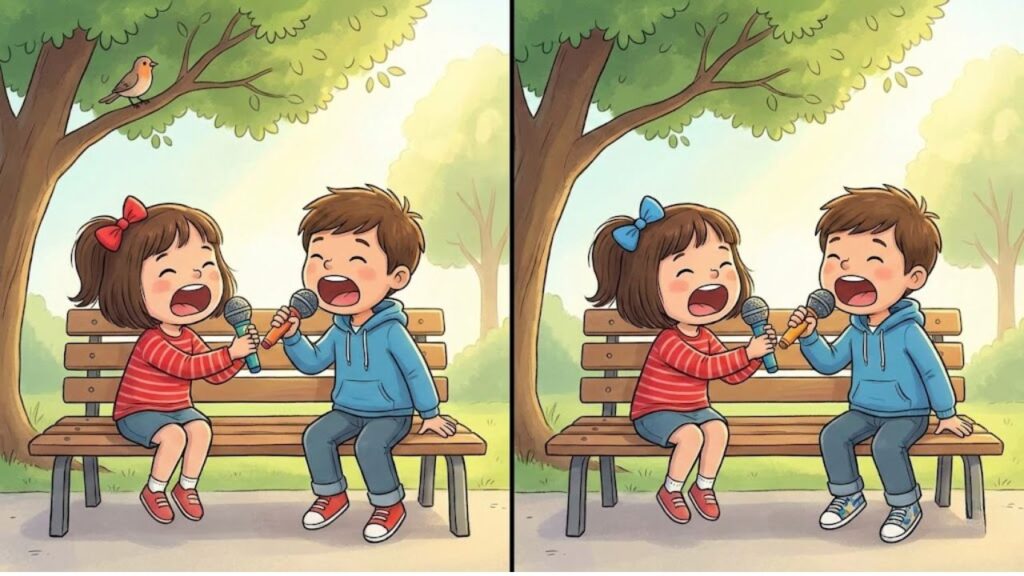
Are you ready for a fun challenge that will test how well you notice details? If you enjoy picture puzzles then the Spot the Difference game is a great way to keep your mind sharp while having fun. Today we have an exciting puzzle for you that shows a girl and a boy shouting at each other. The challenge is to spot the three subtle differences between two nearly identical images within just 9 seconds. It sounds easy but these puzzles are designed to keep you on your toes.
Why Are “Spot the Difference” Puzzles So Engaging?
Spot the Difference puzzles are widely loved across age groups for good reason. These visual brain games demand strong attention to detail, concentration, and quick decision-making. They’re simple in concept but surprisingly effective at exercising your brain. Whether you’re playing for fun or to stay mentally sharp, these puzzles offer a great way to challenge your cognitive abilities while having a good time.
Scientific research supports this too. Engaging with puzzles like these can enhance memory, sharpen problem-solving skills, and improve your ability to identify visual inconsistencies. Over time, they help build faster mental processing and sharper focus, making them a smart choice for daily mental workouts.

The Challenge: Spot the 3 Differences in the Shouting Children Image
This puzzle shows two colorful images of a boy and a girl shouting at each other in an outdoor city setting. Your job is to find three small but noticeable differences between the two pictures within just 9 seconds. Does that sound easy? Think again. The visual changes are carefully positioned to fool your eyes.
In both images, the boy wears an orange shirt with dark pants, while the girl sports a white top and blue skirt. The background includes buildings and a bright sky. Although they seem identical at first glance, closer inspection reveals a few subtle discrepancies that you’ll need to spot under time pressure.
How Can You Spot the Hidden Differences?
# Effective Strategies to Improve Your Puzzle-Solving Speed and Accuracy
If you want to get better at solving puzzles quickly & correctly, try these helpful approaches. Start by scanning the entire puzzle before you begin. This gives you a complete picture of what you need to solve. Look for obvious patterns or easy sections that you can complete first. These quick wins build momentum and make the harder parts less overwhelming. Focus on one section at a time instead of jumping around randomly. When you concentrate on a specific area, your brain can identify patterns more easily. This method also helps you avoid mistakes that happen when you lose track of where you are in the puzzle. Practice regularly to build your skills. Set aside time each day to work on puzzles. Even fifteen minutes of daily practice will improve your abilities faster than occasional long sessions. Your brain needs consistent training to recognize patterns and develop problem-solving shortcuts. Learn to recognize common patterns that appear frequently in puzzles. Most puzzle types have recurring elements that you will see again and again. Once you know these patterns you can solve sections much faster without having to figure out each piece individually. Take short breaks when you feel stuck. Stepping away for a few minutes lets your mind reset. You often return with fresh perspective and notice things you missed before. Pushing through frustration usually leads to more errors. Use elimination techniques when you are unsure about an answer. Cross out options that clearly do not fit. This narrows down your choices and makes the correct answer more obvious. Elimination works especially well when you cannot immediately see the solution. Check your work as you go rather than waiting until the end. Catching mistakes early prevents them from creating bigger problems later. A small error at the beginning can throw off your entire solution if you do not notice it quickly. Time yourself occasionally to track your progress. Knowing how long puzzles take helps you see improvement over time. However, do not rush every puzzle just to beat your previous time. Speed without accuracy defeats the purpose. Study solutions to puzzles you found difficult. Understanding why an answer works helps you handle similar challenges in the future. This learning process is more valuable than simply moving on to the next puzzle. Stay patient with yourself as you develop these skills. Everyone improves at different rates. What matters is steady progress rather than immediate perfection.
– Scan the Whole Image First: Get a full view to understand the layout. Then zoom in on specific areas.
– Compare Side-by-Side: Treat the two images like mirror reflections—symmetry often reveals the clues.
Look for Color Shifts. Slight differences in color shape or object size are usually where the trick lies. The key to solving these puzzles is paying attention to small details. Objects might appear in different shades or have minor variations in their dimensions. Sometimes an item shifts position slightly between images. These subtle changes are designed to test your observation skills. Take your time when examining each section of the picture. Start from one corner and work your way across systematically. This method helps ensure you don’t miss anything important. Your eyes can easily skip over details when you scan randomly. Common hiding spots include background elements that blend into the scenery. Designers often place differences in areas where your attention naturally wanders. Check the edges of the image carefully since people tend to focus on the center first. The challenge becomes easier with practice. Your brain learns to recognize patterns and spot inconsistencies faster over time. Regular practice sharpens your visual perception and makes future puzzles less difficult.
# Use a Timer: Limit yourself to 9 seconds for an added adrenaline rush and a sharper focus
Setting a timer creates an immediate sense of urgency that transforms how you approach any task. When you know you have exactly 9 seconds to complete something your brain shifts into high gear and eliminates distractions automatically. This technique works because it taps into your natural stress response in a controlled way. The countdown creates just enough pressure to boost your concentration without overwhelming you. Your mind stops wandering to other thoughts and zeros in completely on what needs to be done right now. Nine seconds might seem arbitrary but it’s actually a sweet spot for many quick decisions & actions. It’s long enough to think clearly but short enough to prevent overthinking. This time constraint forces you to trust your instincts & act decisively rather than second-guessing yourself endlessly. The adrenaline rush you get from racing against the clock also makes routine tasks feel more engaging. What might normally feel boring suddenly becomes a challenge worth tackling. This added excitement can help you push through mundane activities that you’d typically procrastinate on. Using a timer regularly trains your brain to work more efficiently under pressure. Over time you’ll notice that you can accomplish more in less time even when you’re not using the timer. Your baseline focus improves because you’ve practiced concentrating intensely during those short bursts. Try this method when you need to make quick choices, complete small tasks, or break through mental blocks. The combination of time pressure and heightened alertness creates ideal conditions for getting things done without unnecessary delays.
The 3 Differences in the Girl and Boy Shouting Image
Let’s explore the three key differences hidden in the image puzzle:
The window behind the children shows a different structure or pattern in one image. If you look closely you will notice that the design does not match.
 Simple Morning Hydration Routine That Enhances Skin Glow and Sustains Energy Throughout the Day
The girl’s sock color is different between the two images. In the left picture her socks do not match the ones shown in the right picture. This is a small detail but it matters for spotting the difference.
The girl’s hair length differs between the two images. In one picture her hair is shorter and in the other it is slightly longer. You might not notice this difference unless you look carefully at both images.
Why Do We Love Spot the Difference Puzzles?
These puzzles are more than a fun pastime—they’re a brain booster. They activate visual recognition skills and train your brain to analyze images actively, rather than passively. Over time, you’ll get better at catching inconsistencies not just in puzzles, but in everyday life.
They also build patience and focus. Many differences are so tiny that only a calm and careful eye can spot them. Sharing puzzles with friends or family adds a fun, competitive edge that makes the experience even more rewarding.
Tips to Get Better at Spot the Difference Puzzles
Want to sharpen your puzzle-solving skills? Try these:
If you want to get better at solving puzzles you should practice regularly and challenge yourself with different types of problems. Start with easier puzzles & gradually work your way up to more difficult ones as your confidence grows. One effective method is to solve puzzles every day even if you only spend a few minutes on them. This consistent practice helps your brain recognize patterns and develop problem-solving strategies that become automatic over time. Try working on various puzzle types instead of sticking to just one kind. Crosswords help with vocabulary and word associations while sudoku improves logical thinking and number skills. Jigsaw puzzles enhance spatial reasoning and visual memory. Set aside dedicated time for puzzle solving when you can focus without distractions. A quiet environment helps you concentrate better & think through problems more clearly. Don’t get discouraged if you can’t solve a puzzle right away. Taking breaks often helps because your mind continues processing the problem in the background. When you return to it later you might see solutions that weren’t obvious before. Work with other people sometimes since collaboration brings fresh perspectives. Someone else might notice details you missed or approach the problem from a different angle. Keep track of your progress by noting which puzzle types you find easiest and which ones challenge you most. Focus extra practice time on your weaker areas to develop well-rounded skills. Remember that puzzle solving is meant to be enjoyable. Choose puzzles that interest you & match your current skill level so you stay motivated and engaged with the activity.
– Practice Often: Like any skill, frequent practice improves accuracy and speed.
Try solving different types of puzzles to experience a wide range of challenges. Working with various puzzle styles helps you develop different problem-solving skills. Each type of puzzle exercises your brain in unique ways and keeps your mind engaged. When you regularly switch between puzzle formats you avoid getting stuck in repetitive patterns & continue to grow your abilities.
– Set Time Limits: Try beating the 9-second goal—then aim for even faster times.
Zoom in on Details
Pay attention to the small things because they are usually what changes in these types of images. Look carefully at elements like hair strands, objects in the background or subtle color variations. These minor details are often the key differences you need to spot. Taking the time to examine each section of the image closely will help you identify what has been altered. The changes might be tiny but they are there if you look hard enough.