The first signs of cracked heels usually show up without much warning. Thin white lines start to form across the heel and they look similar to dried-out ground. Initially these lines appear harmless & most people pay little attention to them. You might think it happened from walking around the house without shoes or from wearing your favorite sandals too often. But then one day when you get out of bed in the morning the floor feels different under your feet. There is a sharp stinging feeling and your skin feels tight. The cracks have gotten deeper and they hurt now. Sometimes they even snag on your socks when you put them on.
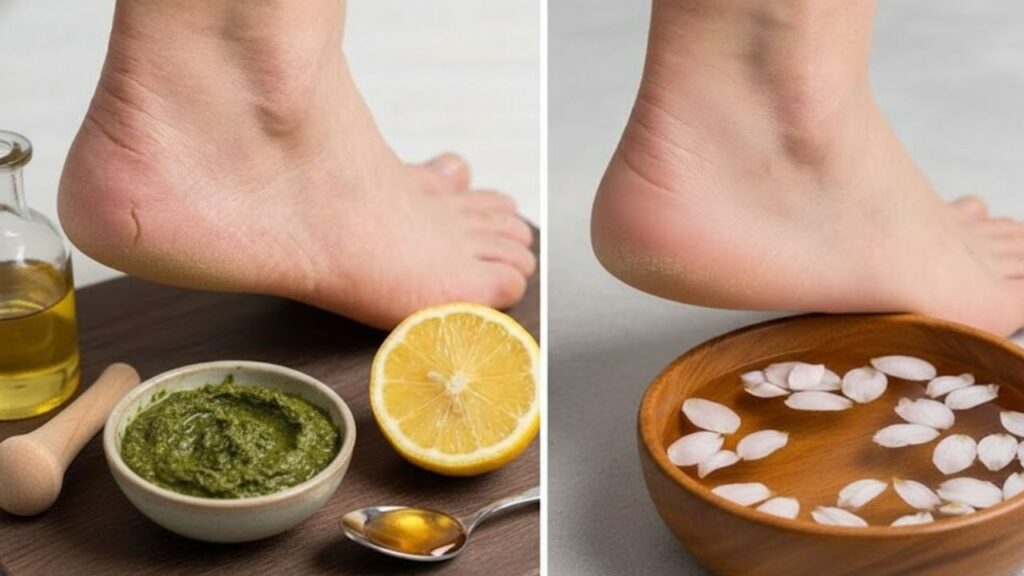
A Simple and Effective Way to Heal Dry Heels
At some point, a quiet realization sets in that it’s time to act. Dry, cracked heels tend to creep up unnoticed until discomfort becomes unavoidable. Every step becomes a reminder that your feet have been needing care for some time. They support you through long hours and busy days. The encouraging part is that relief doesn’t require costly products or complicated routines. Many effective solutions are already sitting in your kitchen, stored in familiar jars and bottles you use daily.
This approach is about reconnecting with your heels and turning the end of your day into a calming self-care moment. Simple ingredients like oil, honey, milk, and salt can gently soften neglected skin. With regular use, these natural remedies help cracks heal steadily and comfortably.
 Simple Morning Hydration Routine That Enhances Skin Glow and Sustains Energy Throughout the Day
The Quiet Message Your Heels Reveal
Your heels work harder than you might realize. They absorb the first impact with every step and bear constant pressure when you stand or walk for long periods. Because they’re usually covered and out of sight, they’re easy to overlook. You might notice roughness during a shower and promise yourself you’ll deal with it later, only to forget again.
Your skin shows the effects of what it goes through over time. Dry and cracked heels usually mean your feet have dealt with constant pressure and rubbing while not getting enough moisture. Walking without shoes on hard surfaces can cause this problem. Wearing sandals or shoes with thin bottoms also plays a role. Hot showers that last too long make your skin lose moisture. Cold weather and heating systems inside your home dry out your skin even more.
The skin on your heels is naturally thick to protect you, but when it loses flexibility, it can’t bend as you walk. Instead, it splits and forms painful cracks. The good news is that your skin constantly repairs itself. When you provide moisture, gentle care, and protection, healing can happen faster than expected.
Your Kitchen as a Gentle Healing Corner
Your kitchen offers more than meals—it holds simple, effective skin remedies. Olive oil or coconut oil deeply moisturizes rough, dry heels. Honey helps draw moisture into the skin while soothing irritated areas. Milk and yogurt naturally soften flaky skin. When sugar or salt is mixed with oil, it creates a gentle scrub that removes dead skin cells.
Using everyday ingredients feels reassuring because they’re familiar and easy to trust. There’s no need for complex labels or specialty products. These are basic items with textures and scents you already know. Understanding how each ingredient helps makes your care routine even more effective.
- Olive Oil / Coconut Oil: Deeply hydrates cracked heels and softens hardened skin; ideal for night massages and DIY scrubs.
- Honey: Seals in moisture, calms irritation, and supports skin repair; works well as a healing mask.
- Milk / Yogurt: Gently loosens dead skin through natural lactic acid; suitable for foot soaks or softening packs.
- Sugar / Salt: Exfoliates rough layers and smooths uneven skin; best used after soaking feet.
- Banana / Avocado: Nourishes skin with vitamins and healthy fats; helpful for deeply cracked heels.
A Calm Evening Routine for Cracked Heels
Think of this routine as a calm moment at the end of the day. The house becomes quieter and you take just fifteen minutes to care for your feet. You can do this simple practice while sitting in your favorite chair or on the edge of your bed. Start by removing your socks and letting your feet breathe for a moment. Notice how they feel after carrying you through the entire day. Begin with a gentle wash using warm water & mild soap. Pat your feet dry with a soft towel and pay special attention to the spaces between your toes. This basic step removes dirt and helps prevent infections. Next apply a good moisturizer to your feet. Use circular motions as you massage the cream into your skin. Focus on the heels and any areas that feel rough or dry. This process softens your skin and feels relaxing at the same time. Take a moment to check your feet for any problems. Look for cuts or blisters or areas of redness. Catching these issues early makes them easier to treat. Trim your toenails straight across if they need it. Avoid cutting them too short or rounding the edges too much. This helps prevent ingrown toenails from developing. Finally stretch your feet and ankles gently. Point your toes forward and then flex them back toward you. Rotate your ankles in slow circles. These movements improve circulation & reduce stiffness. This simple routine takes very little time but makes a real difference in how your feet feel. Your feet work hard every day and deserve this small amount of attention. Making this a regular habit helps keep your feet healthy & comfortable.

Step 1: Warm Milk and Salt Foot Soak
Fill a basin with warm water that feels soothing on your skin. Add half a cup of milk, one or two spoons of salt, and a small amount of olive oil. Soak your feet for ten to fifteen minutes. The warmth relaxes the skin, the milk softens dry areas, and the oil begins restoring moisture.
Step 2: Gentle Exfoliation for Smoothness
Mix sugar or fine salt together with olive oil or coconut oil until you get a thick paste. Apply the mixture to your heels and massage it in using slow circular movements. Pay extra attention to the roughest areas. Be careful not to scrub too aggressively because a gentle approach produces better results than rough treatment. When you are done wash your feet with warm water.
Step 3: Honey and Yogurt Repair Mask
Mix one tablespoon of honey with one tablespoon of thick yogurt and add a few drops of oil. Spread the mixture over the cracked areas and let it sit for ten to fifteen minutes. This treatment provides moisture & helps calm irritated skin. Wash it off gently and dry your feet by patting them with a towel.
Overnight Oil Therapy for Lasting Softness
Before you go to bed at night you should warm up a small amount of olive oil or coconut oil & then massage it into your heels for a few minutes. After that you need to put on clean cotton socks so the moisture stays locked in while you are sleeping through the night. When you wake up in the morning your heels will usually feel much softer and smoother and they will not be as tender as they were before.
Daily Habits to Keep Heels Healthy
When your heels get better you can keep cracks from coming back by following some easy habits. Put on moisturizer after you shower and do not use water that is too hot. Switch between different pairs of shoes and drink plenty of water during the day. If you notice your heels getting dry you should do something about it right away. Taking care of these small things now will help you avoid bigger problems with your feet later on.
When Home Care Isn’t Enough
If heel cracks get very deep or start bleeding you should see a doctor. The same applies if they do not get better even when you take care of them regularly. Some health problems can make healing slower. A doctor or foot specialist can recommend the right treatment for your situation. Home remedies can help you feel better and support the healing process. However getting medical advice makes sure you recover properly and avoid complications.
Cracked heels usually just mean your skin is dry and needs some care. When you use warmth and oils and give it time along with simple things you already have at home your feet can feel comfortable again. They will be ready to carry you through your normal daily activities.