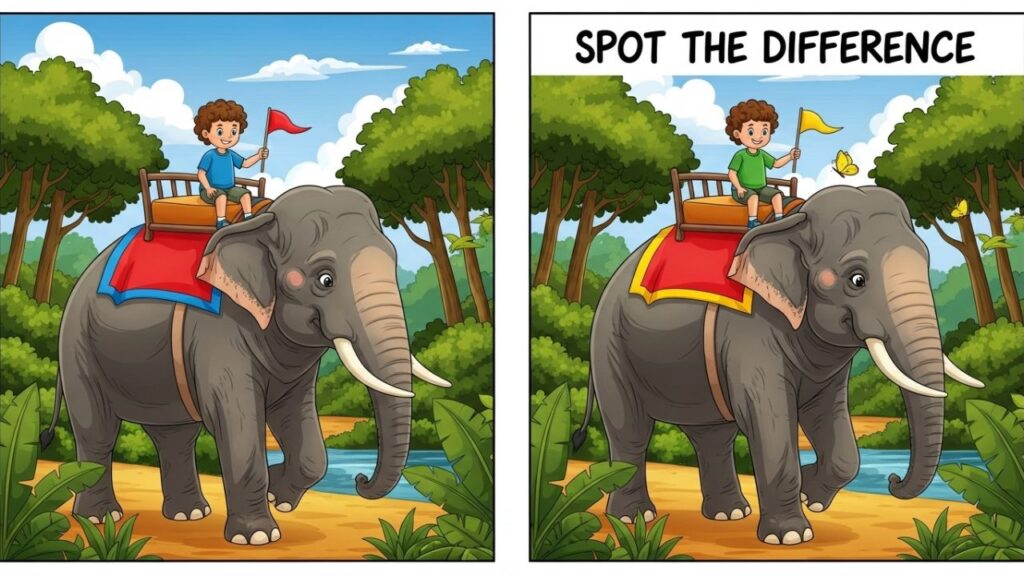
Spot-the-difference puzzles continue to be a favorite brain game for many people. When you look at two images side by side they seem identical at first glance but there are always subtle changes hiding in plain sight. The real test comes when you have to spot these differences quickly. This particular puzzle shows two vibrant pictures of a boy riding an elephant in an outdoor setting. Your mission is to identify three small differences between the images within just 15 seconds. While the pictures might look simple enough the tight time constraint adds an extra layer of difficulty to the challenge. These types of puzzles are excellent for training your observation skills and keeping your mind sharp. The key is to scan both images systematically rather than letting your eyes wander randomly. Some people prefer to divide the pictures into sections and examine each area carefully while others find success by looking for obvious discrepancies first. The 15-second time limit means you need to work efficiently without second-guessing yourself too much. Common differences in these puzzles include changes in colors or missing objects or altered patterns in the background. Sometimes the modifications are in the main subject while other times they hide in less noticeable areas of the scene. Whether you manage to find all three differences within the time limit or need a bit longer these puzzles offer a fun way to exercise your brain and improve your attention to detail.
Why Simple Visual Puzzles Can Still Fool Your Brain
Even when the artwork is clean and colorful and playful the human brain tends to focus on the biggest and most obvious elements first. In this scene your attention naturally locks onto the boy & the elephant and the overall mood of the image. As a result smaller background details like clouds or flowers or tiny changes in trees are often ignored. This is because our brains are designed to process the big picture quickly and fill in the rest automatically.
How Time Pressure Makes Differences Harder to Spot
If you want to succeed at these puzzles you need to stop searching randomly. A quick organized scan works better than just hoping you will notice something by chance. Use this method to find the differences faster. Begin by looking at the background elements like the sky & distant objects for about 33 to 44 seconds. Then examine the middle section where you see trees and large shapes and the horizon line for another 44 to 55 seconds. Finally check the foreground area near the bottom where small details like flowers & tiny objects appear. When you think you found a difference make sure to verify it by looking at that exact spot in both images before continuing your search. This systematic approach from top to bottom helps you avoid focusing too much on the main subjects while overlooking the small changes that puzzle creators typically hide in less obvious places.

A Fast and Effective 15-Second Scanning Strategy
Start with a structured scan instead of looking randomly to improve your chances of finding differences. Begin by examining the background elements such as the sky or distant scenery for approximately three to four seconds. Next shift your attention to the mid-ground features including trees and large shapes or the horizon line for about four to five seconds. After that focus on the foreground by looking at small objects positioned near the ground. When you believe you have identified a change compare that specific area in both images right away to verify your finding.
The Three Hidden Differences Explained
When you discover the answers the differences usually look clear. In this puzzle one cloud that appears in the left image is gone in the right image. The flower beside the elephant has a different color between the two pictures. The coconut tree in the right image also has an additional small branch that is not present in the left image. Each difference is located in a separate visual area including the sky the ground and the middle section which makes the challenge feel fair but difficult.
 Simple Morning Hydration Routine That Enhances Skin Glow and Sustains Energy Throughout the Day
Why Spot-the-Difference Games Are Great for All Ages
Although these puzzles are often seen as kids‘ activities they work just as well for adults. They sharpen visual attention and improve focus under mild pressure while encouraging systematic scanning. These are the same skills needed for checking documents or reviewing screens and catching small errors in daily tasks. As a bonus they provide a relaxing and engaging way to take a short mental break.
Turn This Puzzle Into a Fun Group Challenge
If you enjoy this style the best next step is to try variations where differences involve tiny shape edits instead of obvious removals or where there are 55 differences with a longer time limit. As you practice you will notice your eyes begin to search the usual hiding zones automatically like the sky and corners and small objects near the ground without getting trapped staring only at the main subject.