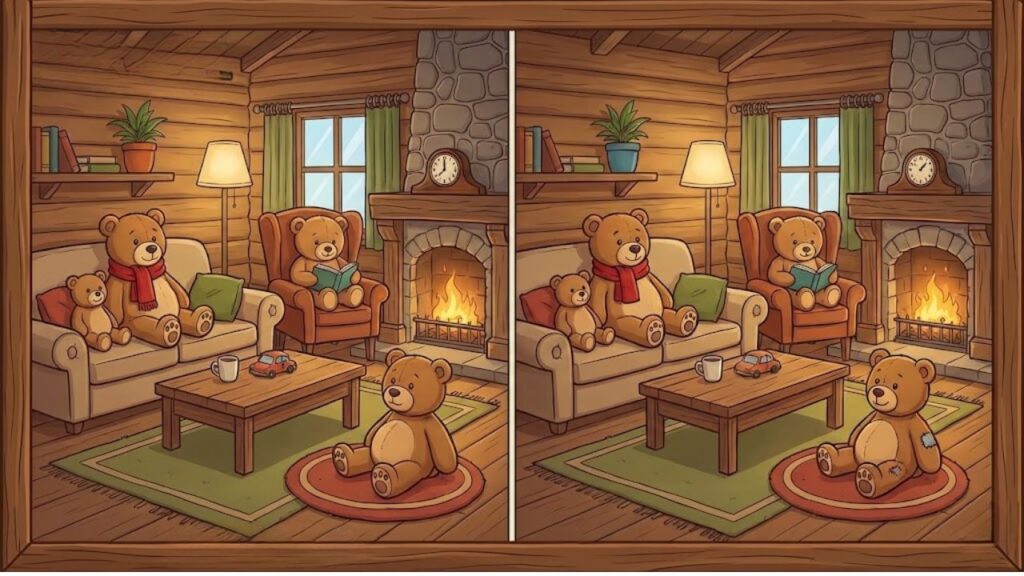
Have you ever tried a spot the difference puzzle to test your brain? These puzzles are entertaining and they help improve your focus and ability to notice small details. Today we have a special challenge for you involving two cute bear images. Your task is to find three small differences between them in just nine seconds. This activity will measure how fast you can concentrate and how sharp your mind is.
Why “Spot the Difference” Puzzles Are Great for You
“Spot the Difference” puzzles are an enjoyable way to keep your brain active while also helping you relax. They combine fun with mental exercise, making them suitable for all ages. These puzzles challenge your eyes and brain to work together, encouraging sharper thinking without pressure. Whether you play for a few minutes or longer, they offer meaningful mental benefits that can carry over into daily life.
How These Puzzles Improve Your Mind
Visual perception gets better when you look closely at two similar images and find their differences. This practice helps train your eyes to spot small details that you might normally miss. Over time this skill carries over into your daily life & makes you more aware of your surroundings. You start noticing things that other people overlook in regular situations. The exercise strengthens your ability to process visual information quickly and accurately. This improved awareness can help you in many practical ways throughout your day.

– Boosts Cognitive Skills: Searching for differences strengthens memory, attention, and problem-solving skills in a calm, low-stress way.
– Enhances Focus and Concentration: Time limits push you to concentrate quickly, helping improve sustained attention over time.
# Provides Mental Stimulation
Physical exercise keeps your body in good shape. In the same way puzzles help your brain stay active & sharp. When you work on a puzzle your mind gets the workout it needs to remain alert and responsive. This mental activity functions much like going to the gym does for your muscles. Regular puzzle solving creates a habit of engaging your brain in focused thinking. Your mind processes information and searches for patterns while you figure out solutions. This ongoing mental engagement helps maintain cognitive function over time. The brain responds to this stimulation by forming new connections and strengthening existing ones. Puzzles challenge you to think in different ways. You might need to use logic for one puzzle and creativity for another. This variety ensures that multiple areas of your brain get exercise. The mental effort required keeps your thinking skills from becoming dull through lack of use. People who regularly solve puzzles often find that their minds feel more awake during daily activities. The stimulation carries over into other aspects of life beyond the puzzle itself.
The Challenge: Spot the 3 Differences Between the Bear Images
In this challenge, you are shown two images featuring cute bears enjoying a playful moment. At first glance, both images look almost identical, but three small differences are hidden within them. You have only 9 seconds to find all three, so stay alert and focused.
The differences can include color changes or items that are missing or moved slightly. Some details are hard to notice which makes the challenge enjoyable & satisfying.
Tips for Spotting the Differences
Start by examining the background elements in the image. Look at areas such as the sky trees, and other surrounding features first because differences are frequently concealed in these sections. When you begin searching for variations between two pictures, focus your attention on the less obvious parts rather than the main subjects. The background portions often contain subtle modifications that are easy to overlook if you concentrate only on the central objects. Pay special attention to natural elements like clouds, foliage and distant objects. These areas commonly hide alterations because people tend to focus on foreground items. By systematically checking the peripheral zones of the image, you increase your chances of spotting all the differences. Make it a habit to scan from one side of the background to the other in a methodical pattern. This approach ensures you do not miss any changes that might be tucked away in corners or edges of the scene.
– Look for Color Changes: A slightly different shade or a missing color detail can signal a difference.

– Check for Missing or Extra Objects: Items such as bees, clouds, or small accessories may appear in one image but not the other.
# Focus on Symmetry
If something seems symmetrical you should double-check both sides for small mismatches. When you look at an image or object that appears to have symmetry you need to examine it carefully. Take time to compare the left and right sides or the top and bottom sections. Small differences often hide in places where you expect to see perfect balance. Symmetrical designs can trick your eyes because your brain naturally wants to see patterns and balance. This means you might overlook tiny variations that break the symmetry. These small mismatches could be important details that change the meaning or quality of what you are examining. Start by dividing the image or object into two halves along the line of symmetry. Look at one side first and note all the details you see. Then examine the other side with the same level of attention. Compare specific elements like shapes, colors sizes and positions. Check if corresponding features match exactly or if subtle differences exist. Pay special attention to edges and boundaries where symmetrical elements meet. These areas often contain the most revealing discrepancies. Also watch for variations in texture, shading or pattern repetition that might not be immediately obvious. Sometimes the mismatches are intentional & serve a specific purpose. Other times they indicate errors or flaws in design or manufacturing. Either way, identifying these differences requires careful observation and a systematic approach to checking symmetry. Remember that perfect symmetry is rare in nature & even in human-made objects. What appears symmetrical at first glance may reveal interesting variations upon closer inspection.
– Use Peripheral Vision: Quickly scanning without focusing too hard can sometimes make differences stand out more clearly.
The Solution: What Are the Three Differences?
The cloud on the left side of the image looks complete in one picture but shows a slight change in the other picture.
One bee positioned near the honeycomb appears in a different location in the second image. This creates a clear visual difference between the two pictures.
– Bear’s Belly Spot: The smaller bear has a dark brown belly spot in one image that is missing in the other.
How These Puzzles Improve Mental Focus
As you search for differences, your brain learns to focus on fine details and process information more efficiently. Over time, this can improve attention span, visual accuracy, and quick decision-making. Comparing images also strengthens memory by training your brain to recall details accurately.
Why You Should Try More “Spot the Difference” Puzzles
Completing one puzzle is just the beginning. When you play Spot the Difference games on a regular basis you can sharpen your observation skills and keep your mind active. These puzzles come in endless themes like animals or nature or abstract designs so they never get boring. They are also a great way to enjoy friendly competition with family or friends while giving your brain a healthy workout.