Spot the Difference challenges have become especially popular because they appear easy but often prove quite difficult. These puzzles help improve your ability to notice small details that might otherwise go unnoticed. In this particular challenge you need to find three small differences between two pictures that show a boy relaxing with his dog. The tricky part is that you only get 12 seconds to find all the changes before time runs out. Are you ready to see how good your observation skills really are? This type of visual puzzle tests whether you can quickly identify subtle variations between two nearly identical images. The time pressure adds an extra layer of difficulty that makes the challenge more engaging and tests your ability to focus under constraints.

Why Number-Based Optical Illusions Trick Your Mind
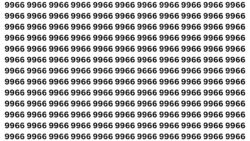
Your brain is built to recognize patterns quickly and efficiently. When you see the same number sequence such as 8429 appearing multiple times your mind automatically assumes that each group looks exactly the same. This ability to spot patterns rapidly helps you in daily life but it can trick you when you encounter optical illusions.
The number 8249 contains the exact same digits as 8429 but arranged differently. Your brain tends to miss this change because the digits look familiar. When your eyes scan these numbers quickly your mind automatically fills in what it thinks should be there and tells you that nothing seems unusual. This happens because our brains are designed to recognize patterns and make quick judgments. Instead of carefully examining each digit in its specific position your brain takes a shortcut. It notices that both numbers have an 8, a 2 a 4 and a 9 somewhere in them. That recognition creates a sense of sameness even though the actual sequence is different. The mental process works so fast that you barely notice it happening. Your brain prioritizes speed over accuracy when it thinks the difference might not matter. This automatic response helped our ancestors survive by letting them make rapid decisions about their environment. However it also means we sometimes miss important details that require closer attention.

This effect gets more intense when there is not much time available. When people feel rushed the brain depends more on quick mental patterns rather than careful and thorough analysis.
Smart Ways to Tackle the 9-Second Number Challenge
To improve your chances of spotting 8249 quickly, avoid reading each number as a complete unit. Instead, break it down and focus on one digit position at a time. Spend a few seconds checking only the first digit, then move on to the next.
Another effective method involves adjusting the way you look at numbers. Rather than scanning from left to right you should try examining them from top to bottom instead. This approach interrupts your normal reading pattern and helps you catch small differences that you might otherwise overlook.
Maintaining your composure matters a great deal. When you feel stressed your field of vision becomes more restricted and this makes it difficult to notice small differences.

What This Visual Puzzle Says About Your Attention Skills
Finding the odd number successfully suggests strong attention to detail and good concentration. It shows that your brain can slow down automatic assumptions and focus carefully, even when time is short.
If you found it difficult, that is completely normal. These challenges are intentionally designed to mislead the brain. The positive side is that practicing optical illusions can gradually improve focus, memory, and mental speed.
Many people like these puzzles as quick mental workouts during breaks because they make the brain work without being too tiring.
The Solution Explained
If you managed to spot 8249 within 9 seconds, well done. That reflects sharp observation and quick thinking. If you did not, take another careful look. Once you notice the difference, it usually becomes obvious, which is part of what makes these illusions so satisfying.
There is no need to feel discouraged if it took you longer than expected. Each attempt you make helps train your brain to recognize patterns more effectively when you face similar challenges in the future.