If you enjoy optical puzzles you will like this one. Spot the Difference challenges are entertaining & good for your brain. These puzzles need focus and strong observation skills. Today we have a fun challenge featuring a happy boy skiing down a snowy mountain. Your goal is to find 3 small differences between two almost identical images of this winter scene in only 9 seconds.
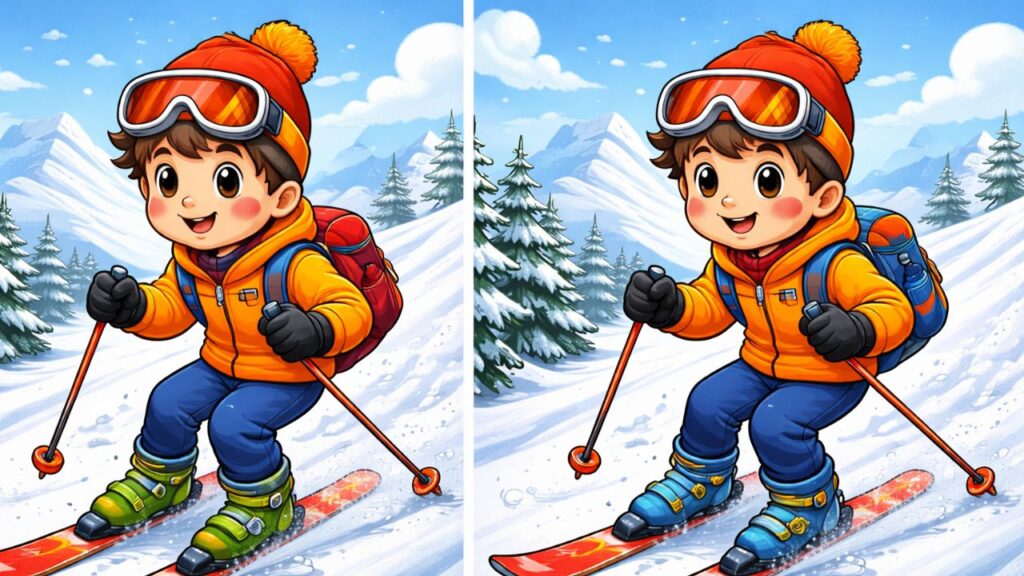
At first glance both images look identical. You see a bright sun shining over snow-covered slopes and a happy skier gliding down the mountain. But when you examine them more carefully you will notice small yet significant differences between the two pictures. Can you identify all of them before time runs out? Let’s explore this entertaining brain teaser and discover how fast you can detect the changes.
What Makes “Spot the Difference” Puzzles Instantly Addictive
Spot the Difference Puzzles: A Simple Brain Exercise Spot the Difference puzzles have remained popular for many years because they offer real benefits. These visual games provide an excellent way to exercise your brain and improve your thinking skills. People enjoy them both as entertainment and as a method to keep their minds sharp.

# Why These Puzzles Remain Popular
Here are some key reasons why these puzzles continue to be so popular:
These games offer a simple way to challenge your mind without requiring special skills or training. Anyone can pick up a puzzle and start solving it right away. The basic rules are easy to understand but the solutions often require creative thinking. Puzzles provide a mental workout that keeps your brain active & engaged. They help improve problem-solving abilities and logical reasoning. Many people find that regular puzzle solving sharpens their focus and concentration over time. The satisfaction of completing a difficult puzzle creates a rewarding feeling. Each solved challenge gives you a sense of accomplishment. This positive feedback keeps players coming back for more. Puzzles fit easily into busy schedules because you can solve them in short sessions. You can work on a puzzle for five minutes or an hour depending on your available time. This flexibility makes them accessible to people with different lifestyles. The variety of puzzle types means there is something for everyone. From word games to number challenges to visual problems, different puzzles appeal to different interests. You can always find a new type to try when you want a change. These activities offer a screen-free entertainment option that many people appreciate. While digital versions exist traditional puzzles provide a break from constant technology use. They give your eyes and mind a rest from screens. Puzzles create opportunities for social interaction when solved with others. Families and friends can work together on challenging problems. This collaborative aspect adds another dimension to the experience.
# Stronger Focus and Attention
Spot the Difference puzzles make you look closely at tiny details. This practice builds your ability to focus over time. The better attention you develop from these games often helps you in everyday life. You will find it easier to concentrate on tasks for longer stretches without getting distracted.
# Better Memory Skills
These puzzles make you remember visual elements, patterns and small differences between images. When you practice regularly your brain gets better at storing and recalling visual information.
# Sharper Visual Awareness
Finding differences requires quick & accurate interpretation of visual cues. Over time this sharpens your ability to notice patterns and details. It makes you more observant in everyday situations.
Working on puzzles gives your mind a peaceful break from everyday life. The fun challenge helps you forget about daily stress and leaves you feeling calm and refreshed.
Inside the 9-Second Test: The Boy Skiing Visual Challenge Explained
Now let’s move on to the puzzle itself. Today’s challenge shows a cheerful boy skiing down a mountain surrounded by winter scenery. He wears a bright orange helmet with ski goggles & a colorful ski outfit that makes him easy to spot against the snowy slopes & blue sky.
The background shows snow-covered trees with the sun shining brightly in the sky. At first glance both images look the same but if you look more carefully you will notice three small differences between them. Your task is to find these differences in less than 9 seconds. Does that sound simple? Let’s find out how you perform!
Smart Scanning Techniques to Solve Difference Puzzles Faster
Before you start looking for the solution here are some useful tips to help you get better at solving spot-the-difference puzzles:
Practice regularly to train your eye to notice small details quickly. The more puzzles you solve the faster you will become at identifying differences. Look at the images systematically instead of randomly scanning them. Try dividing each picture into sections and compare them one area at a time. Pay attention to common areas where differences usually appear such as backgrounds clothing details, facial features & small objects. Take short breaks if you feel your eyes getting tired. A fresh perspective often helps you spot things you missed before. Adjust your screen brightness and viewing angle to see the images clearly. Poor lighting can make it harder to notice subtle changes. Start with easier puzzles & gradually move to more challenging ones. This builds your confidence and develops your observation skills over time. Use a piece of paper or your finger to track which sections you have already checked. This prevents you from looking at the same areas repeatedly. Focus on one image first and memorize its details before comparing it with the second image. This method works well for people who prefer a structured approach.
Quickly Scan Both Images: Begin with a fast overview of both images to understand the overall layout. This primes your brain to notice subtle changes more efficiently.
Check for Symmetry: Differences are often placed in mirrored or balanced positions. Comparing left to right or top to bottom can reveal changes faster.
 Lip Definition Trick: The Exact Liner Method That Makes Lips Look Fuller Without Overlining
Focus on Tiny Elements: Many differences are extremely small, such as slight shape changes, missing lines, or altered details in objects. Careful attention is key.
Use a Timer Challenge: Setting a short time limit—like the 9-second challenge—adds pressure and trains your brain to process visual information faster.
Practice Consistently: Regular exposure to these puzzles strengthens visual memory and attention to detail, making it easier to spot differences over time.
Revealed: The Three Hidden Changes in the Skiing Boy Image
Now it’s time to uncover the three hidden differences between the images. Here’s a clear breakdown of what you should notice:
1. The Missing Sunray
The first difference appears in the sun. In the left image, the sun shows multiple rays extending outward. In the right image, however, one of those rays is missing. It’s a subtle alteration, but once you concentrate on the sun’s edges, the missing ray becomes easier to spot.
2. The Skier’s Scarf
The Skier’s Scarf is a classic winter accessory that combines practical warmth with timeless style. This traditional design features a long rectangular shape that wraps comfortably around the neck and provides excellent protection against cold mountain winds. The scarf typically measures between six and eight feet in length and about eight to twelve inches in width. These dimensions allow for multiple wrapping styles while ensuring adequate coverage. The generous length means you can loop it around your neck several times or let the ends hang down for a more relaxed appearance. Most skier’s scarves are made from wool or wool blend materials. These fabrics offer superior insulation and moisture-wicking properties that keep you warm even when the material gets damp from snow or perspiration. Modern versions often incorporate synthetic fibers like acrylic or polyester to improve durability and reduce cost while maintaining warmth. The traditional color scheme includes bold stripes or geometric patterns in contrasting colors. These eye-catching designs originated from ski club affiliations and team identities. Today the patterns serve both aesthetic and practical purposes since bright colors make skiers more visible on the slopes. The construction of a quality skier’s scarf includes finished edges that prevent fraying. Many feature fringed ends that add visual interest & allow moisture to drip away from the body. The weave should be tight enough to block wind but breathable enough to prevent overheating during physical activity. This versatile accessory works well both on and off the mountain. You can wear it while skiing or snowboarding for neck protection & warmth. It also functions as a stylish addition to everyday winter outfits when paired with coats and jackets. The skier’s scarf remains popular because it delivers reliable performance in harsh winter conditions while maintaining a classic aesthetic that never goes out of style.
The second difference involves the skier’s scarf. The left image shows a scarf that appears longer and flows more freely in the wind. The right image displays a noticeably shorter scarf with a slightly different shape. This change can be difficult to spot initially so examining the scarf carefully is important.
3. The Ski Pole Tip
The tip of a ski pole serves as the primary point of contact with the snow surface. This component plays a vital role in how effectively a skier can push off & maintain balance during their descent or traverse across varied terrain. Most ski pole tips are manufactured from hardened steel or carbide materials. These metals provide the necessary durability to withstand repeated impacts against hard-packed snow, ice, and occasionally rocks hidden beneath the surface. The tip needs to be strong enough to penetrate crusty snow layers while remaining sharp enough to grip effectively. The design of the tip typically features a pointed end that tapers to a fine point. This shape allows the pole to pierce through snow with minimal resistance. Without this penetrating ability, skiers would struggle to plant their poles securely, which would compromise their technique and stability. Just above the actual point, manufacturers attach a small circular disc called a basket. The basket prevents the pole from sinking too deeply into soft snow. Different basket sizes suit different snow conditions. Powder skiing requires larger baskets to distribute weight over a greater surface area while groomed runs work well with smaller, more compact baskets that create less drag. Over time and with regular use, ski pole tips naturally wear down. The sharp point becomes rounded and less effective at gripping the snow. Skiers who frequently encounter rocky terrain or who drag their poles on hard surfaces will notice faster deterioration. Many ski poles feature replaceable tips, allowing users to extend the life of their equipment without purchasing entirely new poles. The angle at which the tip extends from the pole shaft also matters for performance. Most poles position the tip at a slight forward angle. This design consideration helps the pole plant naturally as the skier moves forward creating a more fluid motion that requires less conscious effort.
The last difference is about the ski pole that the skier is holding. When you look at the left picture you will notice that the tip of the ski pole is missing a small detail. However in the right picture that same detail appears clearly at the end of the pole. This might seem like a tiny change but if you look carefully at the bottom part of the pole you will spot this difference right away.
Train Your Eyes: Simple Ways to Sharpen Visual Detection Skills
Even if you managed to find all the differences in today’s puzzle, continuing to practice will help sharpen your skills for future challenges. Here are a few simple ways to improve at Spot the Difference games:
Try Puzzles of Varying Difficulty: As your skills improve, move on to more challenging puzzles. Tougher images help train your eyes to notice finer details and improve overall observation.
Break the image into smaller sections when the puzzle seems too difficult. Start by examining the corners and edges before moving gradually toward the middle. This approach helps you spot differences more easily.
Practice on a regular basis because consistent effort makes a real difference just like with any other skill. Set aside some time to work on these puzzles frequently and you will see your speed & accuracy get better over time.
Be Patient and Stay Calm: Some differences are intentionally subtle. Don’t rush the process—take your time and enjoy the challenge. With patience and repetition, spotting differences will become much easier.