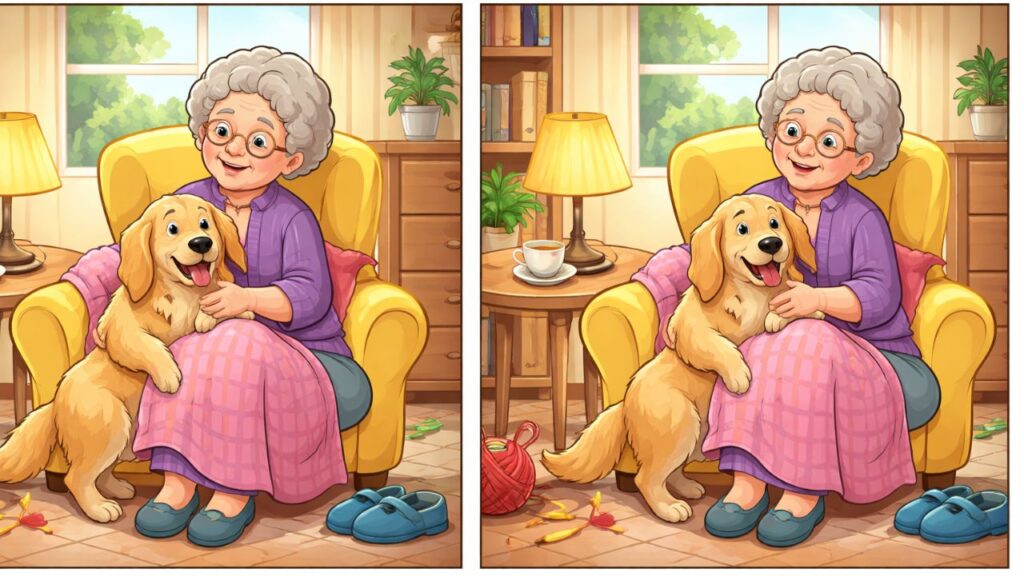
Spot the Difference puzzles have always been a popular activity for people who like testing their observation skills. These challenges are fun and good for your brain which makes them an excellent way to improve your mental sharpness. In this puzzle you need to find three differences between two almost identical images showing a grandma and her dog. The catch is that you only have 8 seconds to spot all the changes. This quick challenge tests your ability to notice details and think fast when time is limited.
Why “Spot the Difference” Puzzles Are So Popular
For decades, “Spot the Difference” puzzles have appeared in books, magazines, and online platforms. People of all ages enjoy them as a light mental workout or a relaxing way to pass the time. Although they often look easy at first, these puzzles can be deceptively challenging. The objective is to carefully compare two similar images and detect small variations, which may include altered colors, missing items, or subtle background changes.
Beyond entertainment, these puzzles offer meaningful mental benefits. Regularly solving them can strengthen focus, concentration, visual memory, and pattern recognition. They also train the brain to process visual information more quickly and accurately, skills that are useful in everyday situations like multitasking and problem-solving.

What Makes This Puzzle Especially Difficult?
Finding differences within a limited time frame requires fast and accurate visual processing. In this challenge, the images of the grandma and her dog look almost identical at first glance, but small differences are hidden within fine details. These changes are carefully placed to test your ability to separate tiny variations from the overall image.
When you have limited time your brain tends to focus on the bigger & more obvious parts of the image. This means you might miss the smaller details. Some differences are extremely subtle & you can only spot them when you look at each section of the image very carefully.
The 8-second countdown adds another layer of difficulty. Working against the clock increases pressure, forcing your brain to stay alert while processing information quickly. This tests not just your visual memory, but also your speed and mental flexibility.
Smart Ways to Spot the Differences Faster
Success in any Spot the Difference puzzle depends on careful observation. These tips can help improve your chances of finding all three differences in time. Start by scanning the entire image to get a general sense of both pictures. Look at the overall layout and main elements before focusing on specific details. This initial overview helps your brain register what should be present in both images. Focus on one small section at a time rather than jumping around randomly. Work systematically from left to right or top to bottom. This method ensures you examine every part of the image without missing areas. Pay special attention to edges and boundaries where objects meet. Differences often appear at these transition points because they are easier to modify. Check the outlines of shapes and where colors change. Look for variations in colors & shading between the two images. Sometimes a difference might be subtle like a slightly darker shade or a missing shadow. These color changes can be hard to spot without close examination. Examine any text or numbers carefully if they appear in the images. Letters might be changed or digits could be different. Small typography changes are common hiding spots for differences. Take brief breaks if you feel your eyes getting tired. Looking at two similar images for too long can make your vision blur together. A few seconds of looking away helps reset your focus. If you get stuck try changing your viewing distance. Moving closer or farther from the screen can make certain differences more obvious. Sometimes a fresh perspective reveals what you missed.
Pay Attention to Small Details: Major elements like the grandma and the dog usually stay the same. Look closely at minor details such as clothing, accessories, or background items where changes are more likely.
Look through the image in an organized way instead of randomly jumping from place to place. Begin at one corner and examine each section carefully before moving to the next area. Using this structured method helps you avoid overlooking important details.
Watch for Color and Shape Variations: Many differences involve slight changes in color, size, or shape. Carefully examine areas like clothing, objects, and the dog’s posture.
Stay calm when you feel the time pressure. The short deadline might make you anxious but hurrying usually causes errors. Keep your concentration and search for one difference at a time.
Practice solving puzzles on a regular basis to help your brain get better at finding differences. When you work on puzzles frequently your visual processing abilities & observation skills will naturally get stronger over time. The more puzzles you complete the faster you will become at spotting even small details that are different between images.
Mental Benefits of Playing Spot-the-Difference Games
These puzzles offer more than simple entertainment. They strengthen your ability to pay attention by making you focus carefully on visual elements for extended periods. Regular practice with these challenges can lead to improved concentration when handling everyday activities. The mental exercise involved in spotting differences trains your brain to notice small details that might otherwise go unnoticed. This skill becomes useful in many real-world situations where careful observation matters. Whether you are reviewing documents at work or watching for hazards while driving the enhanced focus you develop through these puzzles can make a practical difference. Working through visual challenges also provides a mental break from routine stress while keeping your mind active. Unlike passive activities that let your thoughts wander, these puzzles demand engagement without causing mental fatigue. They create a balance between relaxation and cognitive stimulation that many people find refreshing. The progressive difficulty in many puzzle collections helps build your observational skills gradually. Starting with easier challenges and advancing to harder ones allows your brain to adapt and improve without frustration. This steady development makes the activity both accessible for beginners and rewarding for experienced puzzle solvers.
Your brain gets better at spotting patterns when you play these games. Each time you compare similar images you train yourself to notice tiny differences. This skill helps you in everyday life when you need to catch small details that don’t match up.

Another important advantage is better visual memory. When you look at and compare images your brain stores and remembers visual details more quickly. This ability matters for daily tasks like reading driving, & recognizing people you know.
Three Key Differences in the Grandma and Dog Puzzle
Spot the Difference Challenge
This puzzle contains three carefully hidden changes between the two images. Here is a clear breakdown of what to look for:
The first difference appears in the upper portion of the scene. One image shows a specific detail that has been altered or removed in the second image. Look closely at the background elements and any objects positioned in that area. The second change can be found in the middle section. This modification might involve a color shift or a subtle repositioning of an element. Pay attention to the central features & how they relate to surrounding components. The third difference is located in the lower part of the images. This change could be the most challenging to spot because it blends naturally with the overall composition. Examine the bottom area carefully and compare how elements appear in both versions. To successfully identify all three differences you should scan each image systematically from top to bottom. Take your time & focus on one section at a time rather than trying to spot everything at once. Sometimes looking away briefly and returning with fresh eyes can help reveal changes that initially went unnoticed. These types of visual puzzles test your observation skills and attention to detail. The differences are intentionally subtle to create an engaging challenge that requires patience and careful examination.
Grandma’s Collar
In the second image the grandma’s collar has a different shape and color. This small change becomes noticeable when you look closely at what she is wearing.
Dog Treat Bowl: A banana appears next to the treats in the bowl in the second image. This item is missing in the first image.
Dog’s Chest Patch: The shape of the patch on the dog’s chest changes slightly in the second image, making it a small but important detail.
Each difference tests your memory and attention skills. They are not easy to spot right away so you need to look carefully to find them all.
Final Thoughts: Can You Beat the Clock?
Spot the Difference Puzzles: A Simple Way to Sharpen Your Mind
These puzzles give you a practical method to test your observation skills while keeping your brain engaged. You can race against the clock or take your time to enjoy the challenge. Either way you approach it these activities help you develop better focus and train your eye to notice small details. When you tackle your next puzzle, remember to stay relaxed and look carefully at both images. Take a systematic approach by scanning from one side to the other. You might be surprised at how much faster you spot the differences once you develop a rhythm. The key is to avoid rushing through it & instead let your eyes naturally pick up on the variations between the two pictures. Regular practice with these puzzles can make a real difference in your daily life. You will find yourself noticing things you might have missed before. This skill transfers to many situations where paying attention to details matters. Give it a try and track your progress over time to see how your observation abilities improve.